
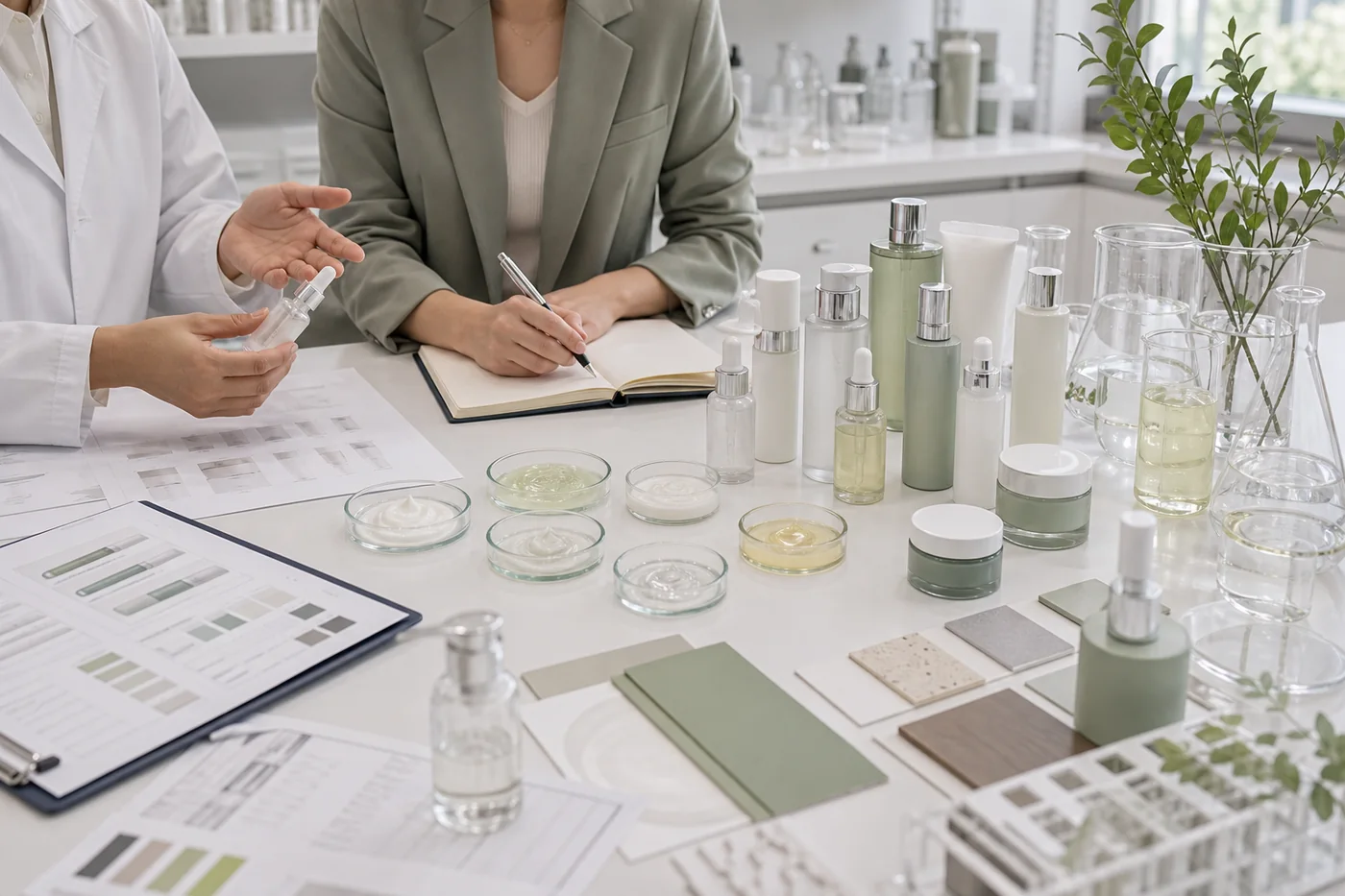
Bulk production should not start simply because one sample looks good. For private label cosmetics buyers, the safer handover point is a clear production kickoff: the formula version, packaging components, artwork files, order quantity, testing expectations, inspection criteria and shipment plan should all be aligned before manufacturing-side work begins.
This checklist is written for overseas B2B beauty buyers preparing skincare, hair care, body care, fragrance or makeup projects. It helps turn sample approval into a clearer production plan.
Why a Bulk Production Kickoff Matters
Many private label delays happen between sample approval and bulk production. The buyer may approve the texture but not the packaging. The packaging may be ready but the artwork version is still changing. The order quantity may be confirmed while the inspection standard, carton mark or shipment schedule is still unclear.
A bulk production kickoff reduces this risk by creating one practical checkpoint before production starts. It does not guarantee that every production issue can be avoided, but it gives the buyer and project team a shared reference for what must be checked before materials, filling, packing and shipment planning move forward.
1. Confirm the Approved Formula Version
Before bulk production, the project team should confirm which formula or sample version is approved. This is especially important if the project went through several rounds of adjustment for texture, scent, viscosity, color, ingredient direction or claim positioning.
- Approved sample code or version name.
- Final texture, scent, color and skin-feel direction.
- Hero ingredients or positioning ingredients.
- Any ingredient preference or avoid list.
- Target market or launch country.
- Whether the product is leave-on or rinse-off.
If a buyer has not yet organized these details, the product specification sheet checklist can help turn the approved sample into a clearer production reference.
2. Confirm Packaging Components and Artwork
Packaging is often the main source of last-minute changes. A production kickoff should confirm the complete packaging set, not only the bottle or jar. This includes primary packaging, closure, pump, cap, applicator, label, carton, insert, seal, shrink sleeve and shipping carton where relevant.
- Approved packaging sample or component reference.
- Material, capacity, color and decoration method.
- Final label or artwork version.
- Barcode, batch code position and date-code location.
- Outer carton mark, master carton quantity and pallet notes if needed.
- Any retailer, importer or marketplace packaging requirements.
Buyers should avoid starting bulk production while artwork, component color, pump type or label information is still changing. A small change before production can become a larger delay after materials are purchased.
3. Confirm Quantity, MOQ and Production Schedule
The production kickoff should record the confirmed order quantity, SKU split and timing expectations. If the project includes multiple scents, sizes or formulas, each SKU should have its own clear quantity and packaging requirement.
- Order quantity by SKU.
- MOQ status and any first-order flexibility.
- Deposit or purchase order status.
- Material procurement timing.
- Estimated production window.
- Target shipment date and required documents.
For early-stage brands, it is better to define realistic timing than to push for a launch date that does not leave enough room for material confirmation, filling, packing, inspection and logistics.
4. Align Quality, Testing and Inspection Expectations
Quality expectations should be discussed before production starts. Buyers do not need to write a full technical manual, but they should define what should be checked and which documents are important for their channel or market.
- Appearance, color, odor, texture and fill-volume reference.
- Packaging fit, leakage, pump function or seal condition.
- Batch code, label position and carton condition.
- Stability, microbiological or compatibility discussion where relevant.
- Retention sample expectations.
- Finished goods inspection checklist.
The FDA notes that cosmetic products are required to be safe when used according to labeling directions or customary use, and that product testing is one possible way manufacturers may support cosmetic safety. For EU-market planning, the European Commission explains that Regulation (EC) No 1223/2009 is the main framework for finished cosmetic products placed on the EU market.
Useful official reference points include FDA product testing information for cosmetics and the European Commission cosmetics legislation overview.
5. Confirm Communication Responsibilities
A kickoff document should also clarify who confirms decisions. In private label projects, communication can involve the brand owner, purchasing manager, product manager, packaging supplier, artwork designer, logistics contact, importer and manufacturing-side partner. If no one owns a decision, the project may stall.
- Buyer-side project owner.
- Formula and sample approval contact.
- Packaging and artwork confirmation contact.
- Production schedule contact.
- Inspection and documentation contact.
- Final shipment confirmation contact.
How BioCosmOrigin Supports Production Kickoff
Bio Cosmorigin is an integrated cosmetics manufacturer and exporter in Guangzhou, China, with its own factory and in-house production. For overseas B2B beauty brands, we support private label project planning, custom formulation, packaging selection, sample adjustment and bulk-production communication through the in-house workflow. For the kickoff stage, the team can help buyers organize the approved sample, packaging details, artwork status, quantity, schedule and quality discussion points before production begins.
This support is most useful when the buyer provides a clear product brief, approved sample reference, target market, packaging preference, expected quantity and launch timeline.
Related Planning Guides
Before kickoff, buyers may also review the pre-production sample approval checklist, pilot batch checklist before bulk production, finished goods inspection checklist and send a product brief to BioCosmOrigin for project discussion.
FAQ
When should a bulk production kickoff happen?
It should happen after the buyer has approved the formula/sample direction and before materials, filling and packing move into the bulk production stage.
Is a kickoff checklist the same as a purchase order?
No. A purchase order confirms the commercial order. A kickoff checklist helps align operational details such as formula version, packaging, artwork, quantity, schedule, testing expectations and inspection criteria.
Can a buyer still change packaging after kickoff?
It may be possible, but it can affect cost, material lead time, compatibility review, artwork, MOQ and production schedule. Packaging changes should be controlled carefully after kickoff.
What should I send before asking for bulk production support?
Send the approved sample reference, product specification, packaging details, artwork version, order quantity, target market, launch timeline and any testing or documentation expectations.
Send Your Production Kickoff Details
If you are preparing to move a private label cosmetics project from sample approval into bulk production, you can send your production kickoff details to BioCosmOrigin for practical OEM/ODM project discussion.