
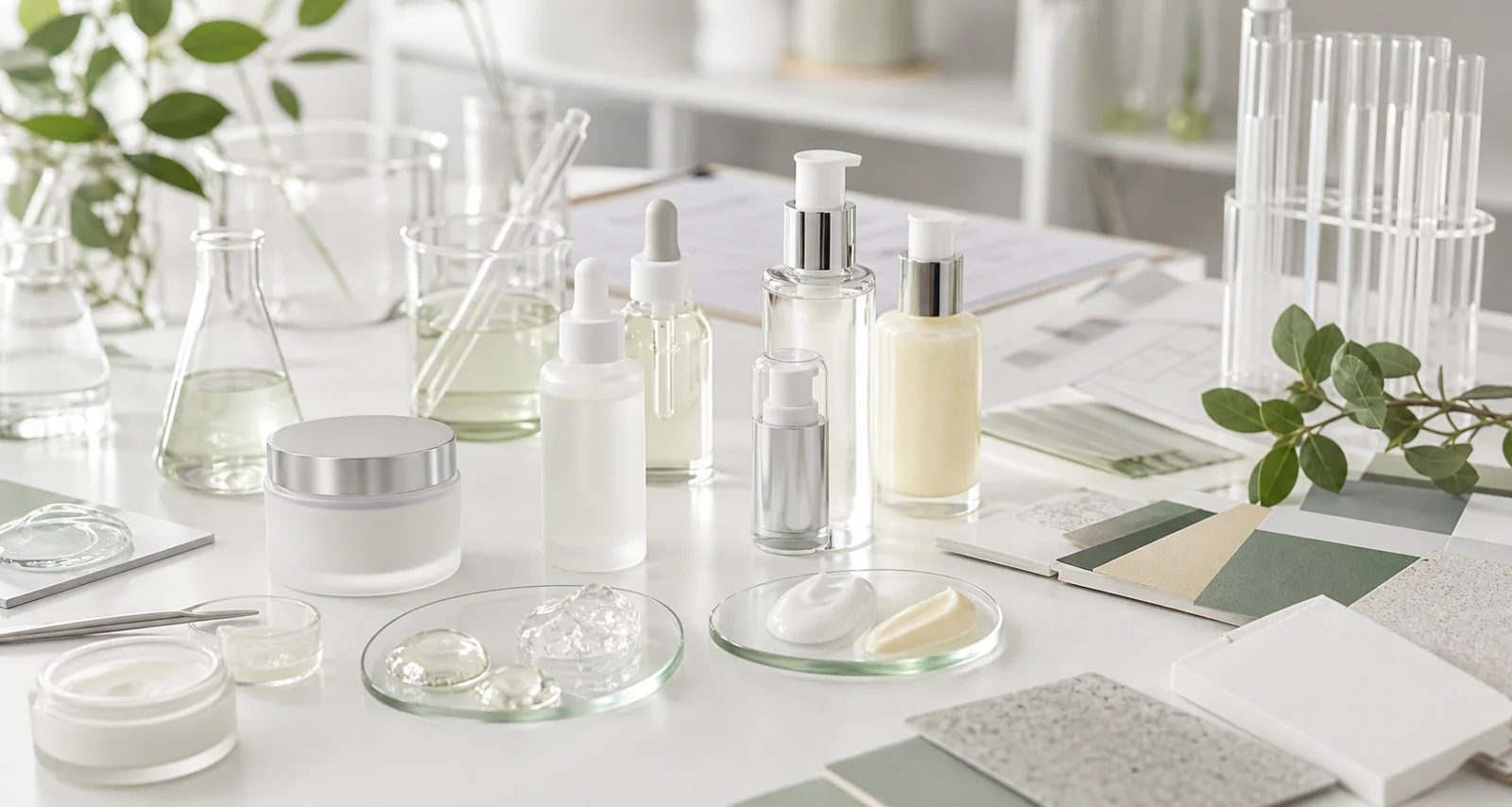
Approving a pre-production sample is one of the most important decisions in a private label cosmetics project. A sample that looks acceptable in a quick meeting may still need clearer confirmation on texture, color, fragrance, packaging, label copy, compatibility and production records before bulk manufacturing begins.
Bio Cosmorigin is an integrated cosmetics manufacturer and exporter in Guangzhou, China, with its own factory and in-house production. We help overseas beauty brands align formula development, sample adjustment, packaging and production planning across our in-house product-development and manufacturing workflow. This checklist helps buyers approve a sample more carefully before confirming bulk production.
Confirm the Formula Version
Before approving a sample, confirm exactly which formula version is being reviewed. Buyers should avoid approving a product only by appearance or memory. The sample should be connected to a clear version reference, ingredient direction, texture notes and the agreed product brief.
- Sample or formula version number
- Product category and intended use
- Target market or country
- Hero ingredients and claim direction
- Texture, color and fragrance notes
- Any changes requested after the previous sample
For projects that need more formula adjustment, review BioCosmOrigin’s custom cosmetic formulation support before final approval.
Evaluate Texture and User Experience
A sample should be tested in the way the final customer will use it. A face serum should be checked for spread, absorption, finish and layering. A shampoo should be reviewed for viscosity, foam, rinse feel and after-feel. A body lotion should be checked for spreadability, residue and fragrance level. A lip balm or gloss should be reviewed for glide, taste-adjacent sensory experience and packaging delivery.
Record observations instead of sending vague feedback such as “make it more premium.” More useful feedback includes “reduce tack after two minutes,” “increase viscosity slightly,” “lower fragrance intensity,” or “improve pump dispensing at room temperature.”
Check Packaging With the Actual Formula
Formula approval and packaging approval should not be treated as completely separate decisions. The actual formula should be reviewed in the intended bottle, jar, tube, pump, dropper, pouch or balm component whenever possible.
- Does the pump or applicator dispense the correct amount?
- Does the formula leak during normal handling?
- Is the viscosity suitable for the closure or nozzle?
- Does the label adhere to the packaging surface?
- Are the fill level, component color and decoration acceptable?
- Does the packaging protect the formula during expected storage and shipping?
For more detail, review the packaging compatibility testing guide.
Review Label and Carton Information
Before bulk production, the buyer should confirm the product name, net content, ingredient list, directions, warnings, batch or date-marking area, barcode, responsible-company details and required market language. Exact requirements depend on the destination market, so regulatory or legal review may still be necessary.
The manufacturing partner can help coordinate production information, but the brand should not assume that attractive artwork is automatically market-ready. Final label and carton approval should be documented clearly before printing.
Approve a Reference Sample for Bulk Production
Once the formula and packaging direction are accepted, keep a clear approved reference. The reference can include the signed sample, sample code, approval date, packaging reference, artwork version and written notes. This gives the buyer and production-side team a common point of comparison.
The purpose is not to promise that every batch will be visually identical under every condition. The purpose is to reduce ambiguity and create a documented approval point before bulk production communication begins.
Questions to Ask Before Giving Final Approval
- Is this the final formula and sample version?
- Have all requested texture, color and fragrance changes been completed?
- Has the formula been reviewed in the intended packaging?
- Are compatibility or stability checks still pending?
- Is the artwork version final for printing?
- Are MOQ, production timing and packaging quantities confirmed?
- What documentation is expected before shipment?
- Who will approve any production-side deviation or substitution?
Buyers can also review the OEM/ODM manufacturing process and BioCosmOrigin’s manufacturing capability before confirming a project.
Short Q&A for Overseas Buyers
Should buyers approve a sample only from photos or video?
Photos and video can help with early review, but texture, scent, spread, after-feel and packaging dispensing are difficult to approve remotely. A physical sample is usually more useful before bulk production.
Can packaging be changed after formula approval?
It may be possible, but changing packaging can affect compatibility, MOQ, decoration, lead time and cost. Significant packaging changes should be reviewed before bulk production.
What should be included in written sample approval?
Include sample code, formula version, packaging reference, artwork version, approval date, requested exceptions and any testing or documentation still pending.
To discuss sampling, formulation, packaging or production planning, send your product brief to BioCosmOrigin.
After the pre-production sample is approved, overseas buyers should align formula version, packaging, artwork, quantity, schedule and inspection expectations before bulk manufacturing starts. This bulk production kickoff checklist for private label cosmetics buyers helps turn sample approval into a clearer production handover.