
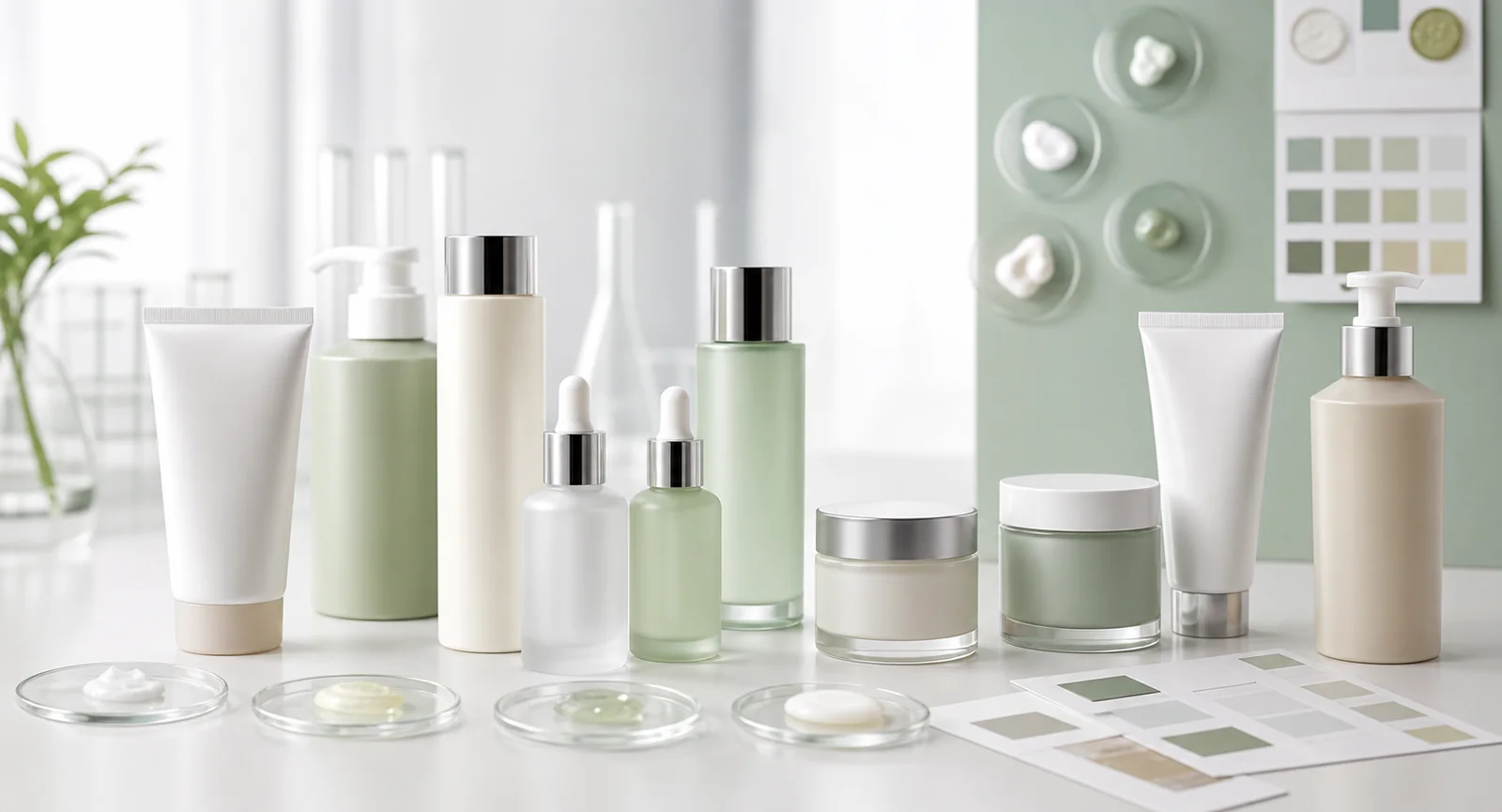
Packaging is no longer only a decoration decision for private label beauty brands. In 2026, more buyers are asking how packaging can support refillability, easier use, better shelf presentation, ecommerce shipping and a more professional product story. For overseas B2B buyers, the practical question is how to brief these packaging expectations before sampling and quotation.
BioCosmOrigin helps overseas skincare, hair care, body care, fragrance and makeup brands coordinate formula, packaging, sampling and bulk production planning from Guangzhou, China. A clear packaging brief helps the factory check compatibility, MOQ, lead time and decoration options earlier in the OEM/ODM process.
Start With the Product Format
Packaging should begin with the product format, not only a visual reference. A serum, face cream, shampoo, body lotion, balm and body wash all behave differently in packaging. Viscosity, dispensing control, oxygen exposure, user hygiene, shipping weight and decoration method can affect the final choice.
- Serums often use droppers, airless pumps or treatment-style bottles.
- Creams and balms may use jars, tubes or airless jars depending on texture and positioning.
- Shampoo and body wash usually require bottles, pumps, flip-top caps or refill pouches.
- Body lotions and milks often need pumps or tubes with stable dispensing.
- Solid perfume balms and makeup products need format-specific component checks.
For product-category planning, buyers can review BioCosmOrigin’s private label cosmetics product range before sending packaging references.
Refillable Packaging: Useful, but Not Always Simple
Refillable packaging can support a stronger brand story, but it also adds decisions. Buyers should clarify whether they want a refill pouch, replaceable inner cartridge, refill bottle or a reusable outer component. Each route affects packaging sourcing, MOQ, compatibility, leak testing, carton design and consumer instructions.
For a first launch, refillability should be evaluated against the sales channel and budget. A DTC brand may need packaging that ships safely and photographs well. A salon brand may prefer larger refill sizes. An importer may need clearer documentation and stable components before confirming a repeat order.
Accessible Packaging Details Buyers Should Consider
Accessible packaging does not have to mean a full redesign. Practical improvements can include easier-open caps, pump formats, clearer label contrast, tactile cues, larger capacity markings or packaging that is easier to hold. These details can make the product feel more professional and easier to use across a wider customer group.
If accessibility is part of your brand positioning, include it in the brief early. The factory can then check whether the preferred component, label size, decoration method and carton design can support those requirements.
Decoration, Label and MOQ Planning
Packaging decoration affects MOQ and lead time. Labels are often more flexible for lower first runs, while silk screen printing, hot stamping, matte coating, color matching and custom molds can increase minimum quantities and development time. Buyers should decide whether the first order needs a fully custom component or a more practical stock component with strong label design.
For early-stage brands, a clear packaging reference with capacity, color, finish, pump or cap type, label size and carton needs will help the manufacturer respond faster. BioCosmOrigin’s low MOQ cosmetic manufacturing guidance can help buyers prepare realistic first-run questions.
Compatibility and Stability Questions
Some packaging looks attractive but may not suit the formula. Fragranced body care, acidic exfoliating products, oils, low-viscosity serums, sunscreen formulas and active skincare may need extra compatibility review. Packaging should be checked for leakage, discoloration, pump performance, label adhesion and formula interaction.
Before bulk production, discuss packaging compatibility and testing expectations. Buyers can also review the packaging compatibility testing guide for skincare and hair care projects.
What to Include in a Packaging Brief
- Product category and formula type
- Target market or country
- Preferred packaging format: airless pump, bottle, tube, jar, pouch, cartridge or balm component
- Capacity, material, finish, cap or pump type and decoration method
- Refill route (pouch, bottle or cartridge), parts retained or replaced, and user-instruction needs; for easier-use packaging, identify the opening, gripping, dispensing or label-reading task to improve, the intended users and use conditions, and how physical samples will be evaluated.
- Label, carton, barcode and language needs
- Expected order quantity or MOQ question
- Launch timeline, shipping channel and testing/documentation needs
Short Q&A for Overseas Packaging Buyers
Should a startup brand use custom packaging?
Not always. A strong stock component with good label and carton design can be more practical for a first run. Fully custom components may be better after sales volume is clearer.
Can refillable packaging be used for skincare and hair care?
Yes, but the refill route must match the formula, channel and budget. Refill pouches, refill bottles and replaceable cartridges each have different MOQ, testing and user-instruction requirements.
What should buyers send before requesting a quote?
Send the product type, target market, packaging reference, capacity, decoration preference, expected quantity, timeline and any refillable or easier-use requirements. You can also review BioCosmOrigin’s OEM/ODM FAQ before sending the brief.
To discuss packaging coordination for a private label beauty project, send your product brief to BioCosmOrigin.