
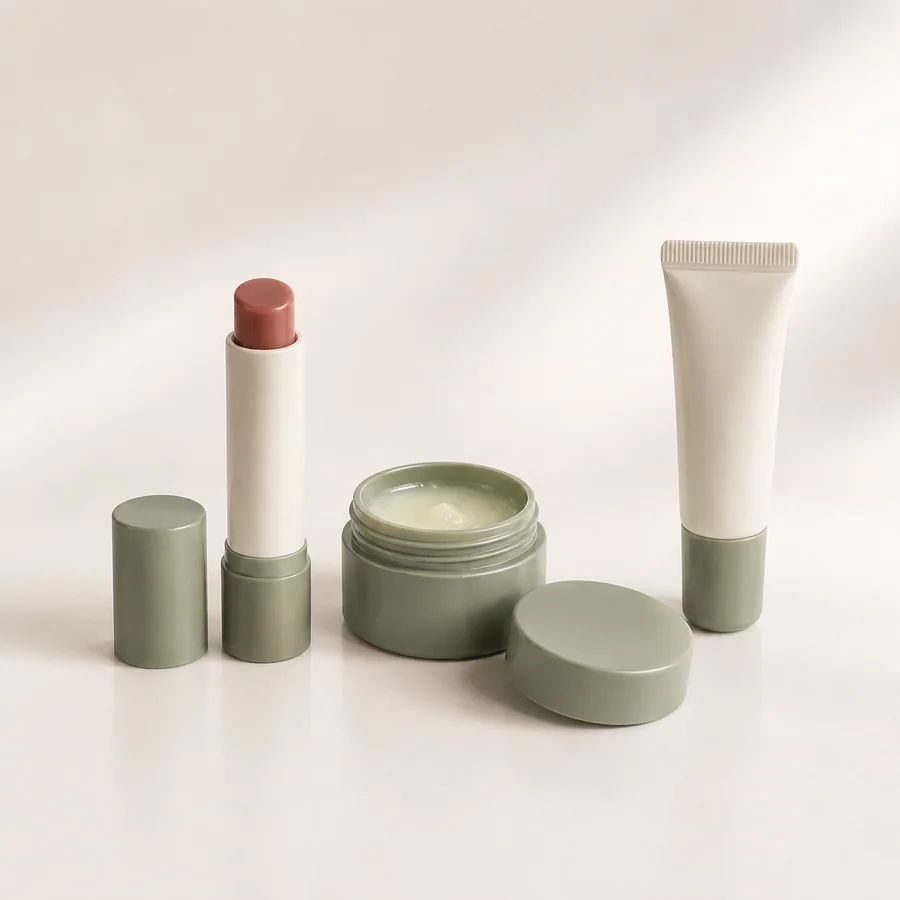
Lip care is moving beyond basic balm. For many beauty brands, lip products now sit between skincare and makeup: peptide lip treatments, tinted balms, glossy oils, sheer stains, soft blurred finishes and multi-use color formats. This creates a practical opportunity for private label brands that want lip makeup products without building a full color cosmetics line.
For overseas B2B buyers, the key is to brief the product clearly enough for a cosmetics OEM/ODM manufacturer to evaluate formula direction, shade range, packaging, MOQ, testing and claim language. BioCosmOrigin supports overseas beauty brands with private label skincare, hair care, body care, fragrance and makeup product development from Guangzhou, China.
Choose the Lip Care Format First
A lip care project can be skincare-led, makeup-led or a hybrid of both. The format affects the base formula, color loading, texture, packaging component and testing needs.
- Lip balm for daily moisture and barrier comfort
- Tinted lip balm for sheer color and skincare positioning
- Lip oil for gloss, slip and lightweight shine
- Lip treatment for peptide, ceramide, butter or botanical positioning
- Lip stain or tint for longer-lasting color with a lightweight feel
- Solid balm or multi-use color stick for travel-friendly routines
Buyers can review BioCosmOrigin’s private label cosmetics product range to understand where lip care fits within skincare, body care, fragrance and makeup projects.
Define the Skincare and Makeup Balance
In 2026, many lip products are expected to feel comfortable, hydrating and easy to wear. A buyer should decide whether the hero is moisture, gloss, tint, treatment, sensory texture or shade story. A clear balance helps the manufacturer choose suitable waxes, oils, butters, film formers, pigments, flavors and fragrance direction.
If the product is skincare-led, the brief may focus on ingredients such as peptides, ceramides, panthenol, plant oils, butters or barrier-support language. If the product is makeup-led, shade payoff, finish, staining effect, gloss level and wear feel become more important. For hybrid products, both sides must be discussed before sampling.
For formulation discussion, see BioCosmOrigin’s custom cosmetic formulation support.
Shade Range and Sensory Direction
A first lip care launch does not always need many shades. For private label brands, three to five wearable shades can be more practical than a large range. Nude, berry, rose, peach, brown and clear treatment formats are common starting points, but the final direction should match the target market, brand identity and sales channel.
Include desired finish in the brief: glossy, balmy, blurred, sheer, jelly, oil-like, creamy or velvet. Also include flavor, scent, cooling or plumping expectations if relevant. Sensory details are especially important because lip products are applied close to taste and smell.
Packaging Choices for Lip Care Products
Packaging depends on texture and brand positioning. Stick components are practical for balm and tinted balm. Doe-foot tubes are common for gloss, oil and liquid tint. Pots can feel premium but need hygiene and user-experience consideration. Squeeze tubes may work for treatment balms and lip masks.
Buyers should provide preferred capacity, applicator type, component reference, label or decoration method, carton needs and whether refillable or travel-friendly packaging is required. If the formula contains oils, fragrance, pigment or soft wax systems, compatibility should be checked before bulk production.
For packaging risk planning, review the packaging compatibility testing guide.
MOQ, Sampling and Testing Questions
MOQ can change depending on formula type, pigment system, shade count, component stock, decoration method and whether the buyer needs a custom formula or a mature base with adjustments. Shade matching and stability review may add time, especially for tinted products.
For a first launch, a smaller shade range with a clear hero formula is often easier to manage. Buyers can discuss low-MOQ options, packaging availability and sample adjustment cycles before confirming the final direction. BioCosmOrigin’s low MOQ cosmetic manufacturing guidance can help buyers prepare realistic first-run questions.
What to Include in a Lip Care OEM Brief
- Product type: balm, tinted balm, lip oil, lip treatment, stain, gloss or solid stick
- Target market or sales channel
- Skincare benefit direction, such as hydration, barrier support or peptide positioning
- Shade range, finish, pigment level and sensory direction
- Flavor, scent, cooling or plumping expectations if needed
- Packaging format, applicator, capacity and decoration preference
- Expected order quantity or MOQ question
- Testing, documentation and timeline needs
Short Q&A for Private Label Lip Care Buyers
Can a tinted lip balm be developed without a full makeup line?
Yes. A tinted balm or treatment gloss can be a lip makeup product that complements skincare, body care or fragrance lines without requiring a full color cosmetics range.
How many shades should a first launch include?
Many first launches are easier to manage with three to five practical shades plus one clear treatment option. Larger shade ranges may increase sampling, stability and inventory complexity.
What should buyers send before requesting a quote?
Send the product type, target market, texture, shade direction, packaging reference, expected quantity, launch timing and testing needs. You can also review BioCosmOrigin’s OEM/ODM FAQ before sending your brief.
To discuss a private label lip care or tinted balm project, send your product brief to BioCosmOrigin.