
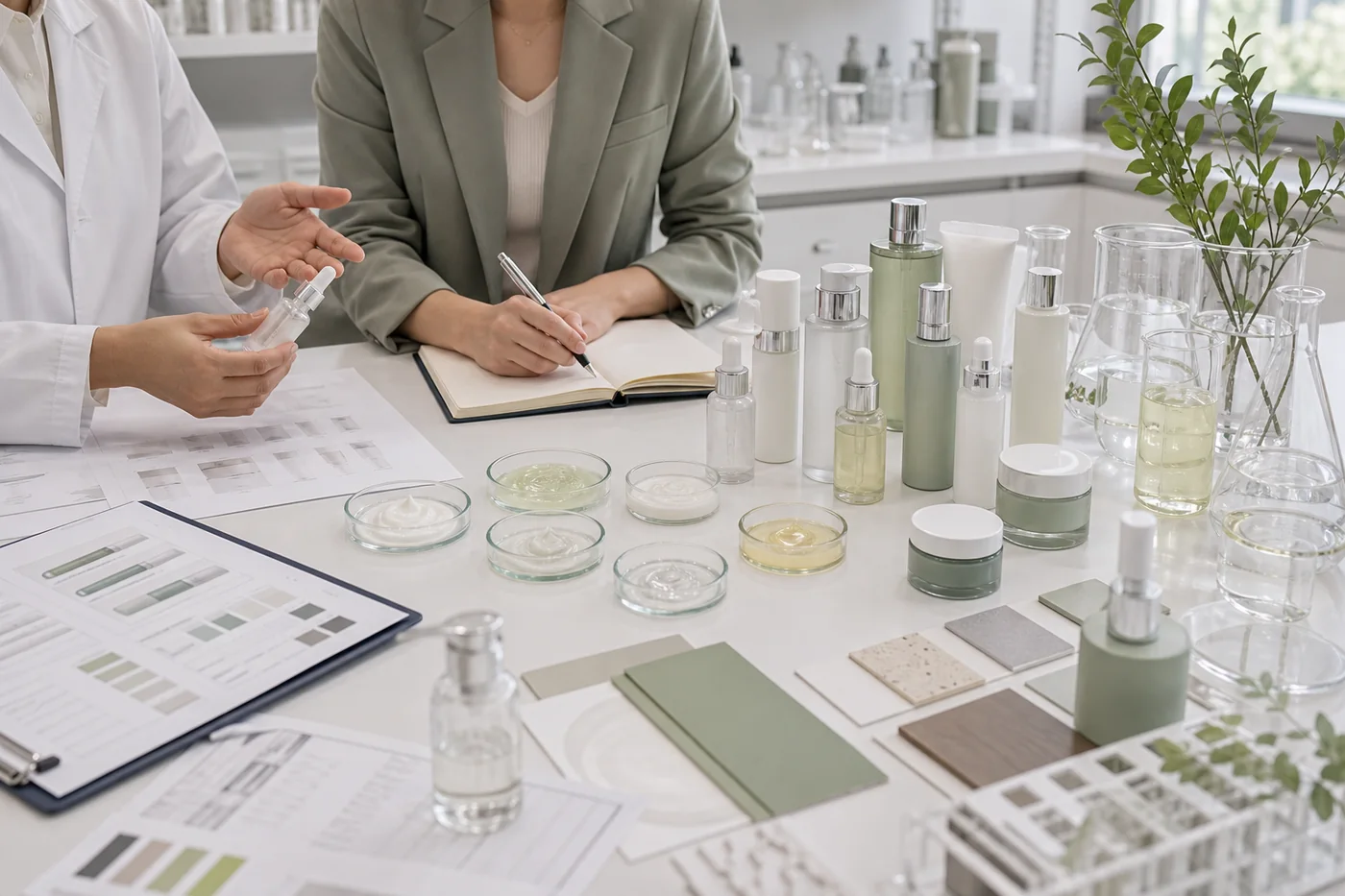
Face serums remain one of the most flexible product formats for private label skincare brands. A serum can carry a peptide story, barrier-support positioning, antioxidant direction, brightening concept, hydration claim or sensitive-skin routine, but the project brief must be precise before sampling begins.
For overseas B2B buyers, the key is not to chase every active ingredient trend at once. A good serum project starts with the target user, formula goal, texture, packaging format, claim direction, testing expectations and order plan.
Choose One Clear Serum Positioning
A private label face serum should have one primary role. Trying to combine too many claims can make the formula harder to develop, harder to explain and harder to support in the target market.
Common serum directions include:
- Hydrating serum with hyaluronic acid, glycerin or humectant-rich positioning
- Barrier-support serum with ceramide, panthenol, ectoin or microbiome-friendly language
- Peptide serum for firmness, elasticity or skin longevity positioning
- Antioxidant serum with vitamin C derivative, ferulic-style or botanical support
- Oil-control or pore-care serum for combination and blemish-prone skin
- Post-treatment comfort serum for gentle, low-irritation routines where appropriate
If your brand needs a specific active system or differentiated sensory profile, discuss it through custom cosmetic formulation rather than choosing a generic base too early.
Be Careful with High-Interest Ingredients
Ingredients such as peptides, ectoin, PDRN-style concepts, exosome-inspired language and microbiome-support positioning are attracting buyer attention. They can be useful directions, but they need careful claim control, documentation discussion and market-side review.
For most private label projects, it is safer to brief the functional goal first:
- Support a smoother and more hydrated look
- Help reinforce the skin barrier feel
- Improve the look of dull or tired skin
- Support a gentle routine for sensitive-feeling skin
- Pair well with moisturizer, sunscreen or makeup
The ingredient story should support the product concept, not replace it. This is especially important for brands selling into North America, the Middle East or Southeast Asia, where claim expectations and documentation needs may differ.
Define Texture Before Packaging
Serum texture affects repeat purchase and packaging fit. A watery serum, gel serum, milky serum and oil serum may each need different viscosity, filling and component checks.
Useful texture decisions include:
- Fast-absorbing watery serum for humid markets
- Gel serum with cushion and slip
- Milky serum for barrier-support or comfort positioning
- Oil serum for glow, facial massage or dry-skin routines
- Fragrance-free or low-fragrance direction for sensitive-skin positioning
When sampling, ask testers to comment on absorption speed, stickiness, layering under sunscreen, after-feel and compatibility with the target climate.
Plan the Right Serum Packaging
Packaging should be confirmed after the formula direction is understood. A dropper bottle may look premium, but it is not always the best choice for every serum viscosity or market.
- Dropper bottles for watery or oil-based serum formats
- Airless pumps for formulas that need cleaner dispensing and premium presentation
- Pump bottles for milky or gel serum textures
- Small trial sizes for distributor sampling, ecommerce bundles or launch testing
- Opaque or tinted components when formula appearance and light exposure need review
Before approving the serum pack, review the proposed formula in the intended bottle and dispenser at the planned fill volume. Record the formula sample and component versions, dispensing consistency, pump priming or dropper pickup, and any leakage or blockage under agreed use and transport conditions; viscosity alone does not confirm compatibility. Use the packaging compatibility checklist to agree the checks, acceptance criteria and unresolved items, then record the approved formula-pack combination within your cosmetics OEM/ODM manufacturing process.
MOQ and SKU Planning for Serum Launches
New skincare brands often want several serums at once, but a focused first launch may perform better. One strong hero serum and one supporting moisturizer or toner can be easier to test than a large serum range.
If your project is early-stage, discuss packaging availability, component MOQ, formula development cost and first-run quantity with a low MOQ cosmetic manufacturer. Low MOQ planning should still include stable packaging, testing direction and realistic timelines.
What to Include in Your Face Serum Inquiry
When contacting a face serum manufacturer, send a concise product brief with:
- Serum type and primary positioning
- Target market, channel and target user
- Hero ingredient direction or ingredients to avoid
- Texture, scent and after-feel preference
- Packaging format, capacity and decoration preference
- Expected order quantity or MOQ question
- Testing, documentation and export support needs
- Launch timeline and sampling schedule
To discuss a project with BioCosmOrigin, send your product brief with the above details and your target launch market.
How BioCosmOrigin Supports Face Serum Projects
BioCosmOrigin is a Guangzhou, China cosmetics and personal care OEM/ODM manufacturer helping overseas B2B beauty brands develop private label skincare, hair care, body care, fragrance and makeup products from formula concept to finished goods.
For face serum projects, BioCosmOrigin can support product concept discussion, sample adjustment, custom formulation, packaging coordination, bulk production planning and export manufacturing communication.
FAQ
Can a private label face serum be customized for different target markets?
Yes. Texture, ingredient direction, packaging and documentation can be discussed based on the target market, climate, user expectation and selling channel.
Should a serum use peptides, ectoin or exosome-inspired positioning?
It depends on the brand concept, claim direction, budget and documentation requirements. Start with the formula goal first, then decide which ingredient story supports it best.
What packaging is best for a face serum?
There is no single best option. Droppers, airless pumps and pump bottles can all work, depending on viscosity, formula sensitivity, usage experience, price point and shipping needs.