
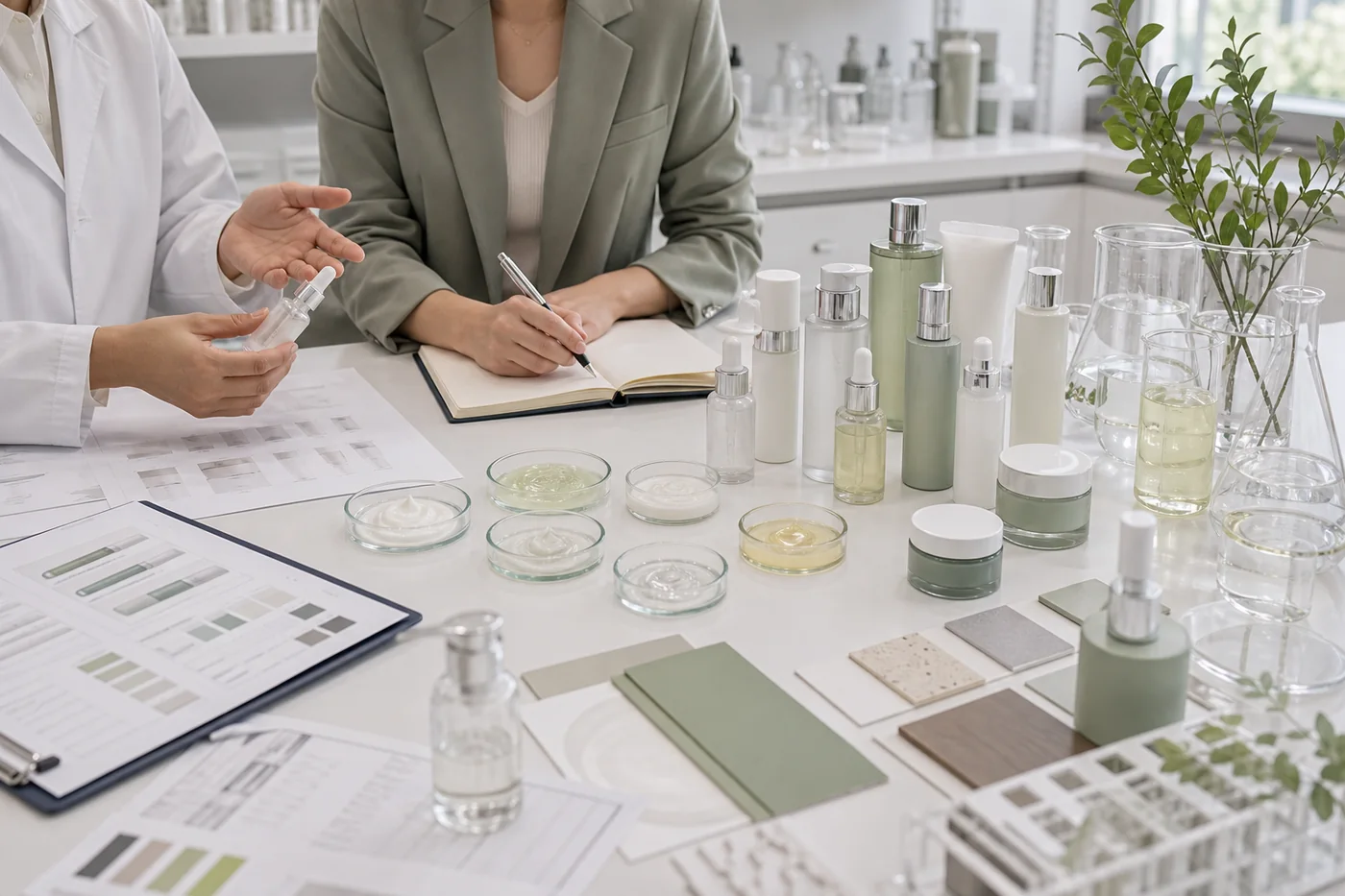
Skincare products that work well in one market may feel heavy, sticky or unstable in another. For brands selling into Southeast Asia, the Middle East or other hot and humid regions, climate should be part of the product brief from the first sampling discussion.
Climate-adaptive skincare does not mean making exaggerated claims. It means developing formulas, textures and packaging choices around real use conditions: heat, humidity, sweat, air conditioning, pollution, transport temperature and daily sunscreen habits. For overseas B2B buyers, this can make a private label skincare project more practical and easier to position.
Why Climate Should Shape the Product Brief
A buyer planning skincare for Singapore, Malaysia, the Philippines, Thailand, the UAE or Saudi Arabia may need a different texture and packaging direction than a buyer focused on a dry winter market. The same serum or cream concept can perform differently when users move between outdoor heat, indoor air conditioning and high daily UV exposure.
Before asking for samples from a private label skincare manufacturer, define where the product will be sold and how it will be used. This helps the factory understand whether the project should prioritize a lightweight finish, cooling feel, oil-control support, barrier comfort, fragrance level, travel stability or packaging protection.
Formula Directions for Hot and Humid Markets
In warm and humid climates, buyers often look for products that absorb quickly and do not leave a heavy film. Useful formula directions may include:
- Lightweight gel cream for daily hydration
- Watery serum with barrier-support positioning
- Oil-control toner or essence for combination skin
- Refreshing body lotion with a non-sticky after-feel
- Daily-use sunscreen or after-sun style skincare concept where market regulations allow
When the product requires a specific active, sensorial profile or claim story, discuss it through custom cosmetic formulation rather than choosing a generic stock base too early.
Texture Matters More Than a Trend Name
For B2B buyers, texture is not only a marketing detail. It affects repeat purchase, review quality and whether the product fits the climate. A formula can be positioned as hydrating, barrier-supporting or refreshing, but users in hot markets will still judge it by how it feels after application.
Useful sampling feedback should be specific:
- Absorption speed after 30 seconds and 5 minutes
- Sticky, tacky, silky, watery or powdery after-feel
- Comfort under sunscreen or makeup
- Fragrance strength in humid air
- Performance after sweating or moving between heat and air conditioning
This kind of feedback helps the OEM/ODM team adjust the formula more precisely than general comments such as “make it more premium.”
Packaging Choices for Heat, Shipping and Daily Use
Packaging should support both the formula and the launch channel. A lightweight lotion, a watery serum and a sunscreen-style product may each require different pumps, caps, bottles, tubes or airless formats.
- Airless bottles can reduce repeated product exposure for some formulas
- Flip-top tubes may suit sunscreen-style or body care products
- Pump bottles can support daily-use lotions and larger family formats
- Travel sizes can help distributors or ecommerce sellers test demand
For export projects, ask about packaging compatibility, leakage risk, label durability, carton protection and storage conditions before bulk production. These practical checks are part of a more stable cosmetics OEM/ODM manufacturing process.
Testing and Documentation Questions to Ask
Testing needs depend on product type, market and claim direction. Buyers should discuss the following early:
- Stability testing direction for heat and storage conditions
- Packaging compatibility and leakage checks
- Microbiological testing expectations
- Claim support and whether extra testing is needed
- Export documents, ingredient lists and market-side registration support
The manufacturer can help prepare production-side documentation, while the brand should still confirm local compliance requirements for its selling country.
When to Use a Low MOQ Launch Plan
For a climate-adaptive skincare concept, it may be sensible to start with one hero SKU and a small supporting product instead of launching a large range immediately. A lower MOQ plan can help brands test texture preference, packaging response and channel feedback before scaling.
If your project is early-stage, compare first-run options with a low MOQ cosmetic manufacturer and prepare realistic expectations for packaging availability, unit cost and production timing.
How BioCosmOrigin Can Support the Project
BioCosmOrigin is a Guangzhou, China cosmetics and personal care OEM/ODM manufacturer helping overseas B2B beauty brands develop private label skincare, hair care, body care, fragrance and makeup products from formula concept to finished goods.
For climate-adaptive skincare projects, BioCosmOrigin can support formula direction, sample adjustment, packaging coordination, bulk production planning and export manufacturing communication. To start a discussion, send your product brief with your product category, target country, texture goal, packaging format, expected quantity and launch timeline.
FAQ
What does climate-adaptive skincare mean for private label brands?
It means the formula, texture, packaging and testing plan are designed around the target market’s use conditions, such as heat, humidity, UV exposure, sweat, pollution and air-conditioned environments.
Which skincare textures work better in hot and humid markets?
Many buyers prefer lightweight gels, watery serums, fast-absorbing lotions and non-sticky finishes, but the best texture depends on the target user, product category and claim direction.
Should I finalize packaging before sampling?
No. It is usually better to confirm the formula direction first, then choose packaging that matches viscosity, filling requirements, usage habits, shipping route and shelf presentation.